

🔴 By | Gitanjali Thorat
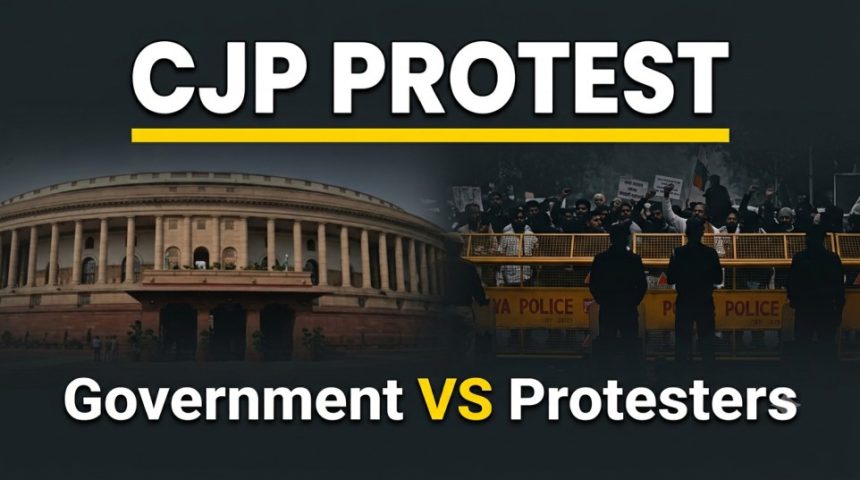
Mumbai – The CJP (Cockroach Janta Party) protest has emerged as a major political issue after thousands of supporters gathered in Delhi and attempted a march towards Parliament over alleged irregularities in the medical entrance examination system and demands for education reforms. The “Sansad Chalo” march from Jantar Mantar witnessed a tense situation after protesters were stopped by security forces. Protesters alleged excessive use of force, while authorities maintained that security measures were necessary around Parliament.
🟡 Protesters Allege Police Crackdown During Parliament March
CJP supporters claimed that their movement was peaceful and aimed at highlighting concerns of students affected by alleged examination irregularities. According to protesters, police action, including the use of tear gas and batons, was an attempt to suppress their democratic protest.
Authorities, however, alleged that some protesters tried to break security barriers and that action was taken to control the situation. Reports also stated that several security personnel were injured during clashes, while police detained some protesters following the incident.
🟡 Education Minister Dharmendra Pradhan Becomes Centre of Protest Demands
The main demand raised by CJP leaders has been the resignation of Union Education Minister Dharmendra Pradhan over alleged examination paper leaks and concerns regarding transparency in the education system.
Protesters have also demanded the release of activist Sonam Wangchuk and compensation for families affected by the alleged examination controversy. The movement gained further attention after Wangchuk’s hunger strike and his health-related developments became a major issue among supporters.
🟡 Government Begins Dialogue; J.P. Nadda Meets CJP Representatives
Amid rising tensions, the government moved towards dialogue with CJP representatives. Union Minister J.P. Nadda held a meeting with representatives of the protesting group and assured that their demands would be discussed.
Following the meeting, CJP representatives said the government had agreed to listen to their concerns, although they maintained pressure on their key demands.
🟡 Amit Shah–Dharmendra Pradhan Meeting Adds Political Heat
The protest also triggered discussions within the government. Home Minister Amit Shah held a meeting with Education Minister Dharmendra Pradhan amid the growing controversy. The meeting was seen as an effort by the government to assess the situation and discuss the next steps regarding the education-related allegations and political pressure created by the protest. However, no announcement regarding any resignation or major policy decision was made.
🟡 Opposition Raises Questions Over Protest Handling
The CJP protest also became an issue in Parliament, with Opposition leaders targeting the government over the handling of the demonstration and the broader concerns of students.
Opposition parties argued that young people raising questions about examination transparency should be heard instead of facing restrictions. They demanded accountability from the government and called for a detailed discussion on education reforms and examination security.
The Opposition also criticised the alleged police action against protesters, saying democratic protests should be handled through dialogue.
🟡 Government’s Stand: Security and Rules Must Be Followed
The government’s position remains that while citizens have the right to protest, maintaining law and order near Parliament is essential. Officials have argued that security protocols cannot be ignored during large gatherings near sensitive government areas.
The Centre has indicated that discussions can continue but has not accepted the protesters’ demand for the resignation of the Education Minister.
🟡 Movement Spreads Beyond Delhi
The impact of the CJP movement has been reported beyond the national capital, with supporters organising demonstrations in other cities. In Nagpur, supporters gathered backing Sonam Wangchuk and raised similar demands against the Education Ministry.
🟡 Current Situation: Protest Moves From Streets to Negotiation Table
The CJP protest has now entered a crucial stage. While protesters continue demanding action from the government, the Centre has started engagement through meetings with representatives.
The coming days will decide whether dialogue leads to a settlement or whether the movement continues to intensify. The controversy has now expanded beyond a protest, becoming a larger debate over examination reforms, youth concerns, government accountability and the right to democratic expression.