

🔴 By |Arvind Jadhav
🟡 When Campuses Turn Into Corridors of Power
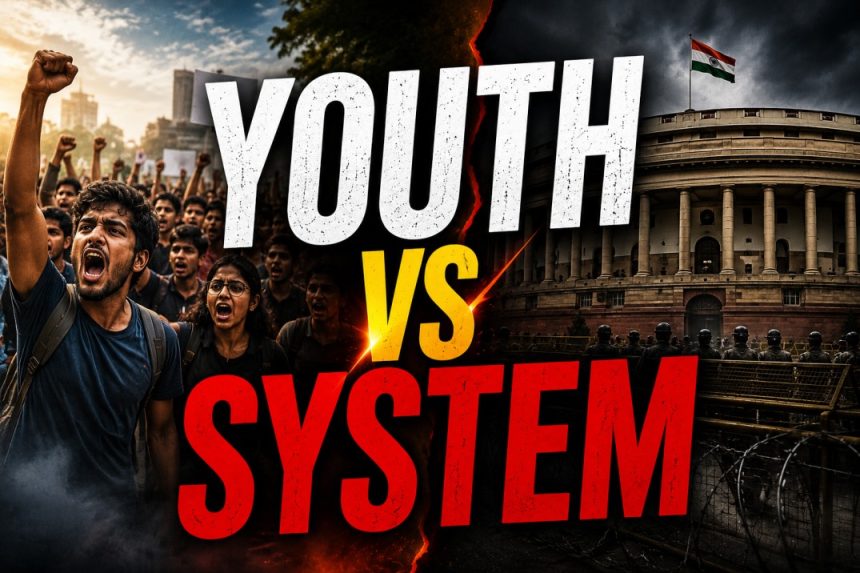
What began as a student protest over alleged examination irregularities has rapidly transformed into a national political flashpoint. In New Delhi, thousands of students marching toward Parliament were met with police force, including baton charges and tear gas, after security barriers were pushed. The confrontation left many injured and instantly elevated the issue from an academic grievance to a matter of national concern, drawing attention across political and public spheres.
🟡 Rahul Gandhi: From Participant to Political Focal Point
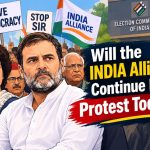
At the heart of the unfolding situation is Rahul Gandhi, who has positioned himself as the leading political voice backing the students. Briefly detained during the protests, he later met injured participants and sharply criticised the government’s handling of the situation. His argument has centered on the idea that students raising concerns deserve to be heard, not suppressed—turning the protest into a wider debate about democratic rights and accountability.
🟡 A Rare Opposition Alignment Emerges
What makes this moment particularly significant is the convergence of multiple opposition leaders around the same issue. Figures associated with Sharad Pawar, along with Uddhav Thackeray and Akhilesh Yadav, have openly supported the protest. Their involvement signals more than symbolic backing—it reflects a broader political alignment forming around youth-related concerns, something not often seen in such a unified manner.
🟡 The Core Flashpoint: Demand for Accountability
At the center of the agitation lies a clear demand: the resignation of Union Education Minister Dharmendra Pradhan. Protesters argue that repeated issues in major examinations point to deeper systemic problems that require accountability at the highest level. This demand has now moved beyond protest sites and into the national legislature, intensifying the political stakes.
🟡 Dialogue Attempts Amid Rising Tension
In response to growing pressure, the government has initiated outreach efforts. Senior leaders, including JP Nadda, have engaged with protest representatives, while Union Minister Jitendra Singh has taken part in discussions aimed at easing tensions. Notably, he also held a meeting with Rahul Gandhi, indicating an attempt to open direct communication between the government and opposition during a critical moment. Despite these efforts, differences remain unresolved.
🟡 Parliament Reflects the Street
The impact of the protests is clearly visible inside Parliament, where proceedings have been repeatedly disrupted. Opposition members are pressing for a detailed discussion on the issue, while the government maintains its focus on order and procedural functioning. The resulting stalemate highlights how deeply the issue has penetrated the political system.
🟡 From Local Protest to National Sentiment
What started in the capital is now echoing across different parts of the country. Students, youth groups, and sections of civil society have begun to engage with the issue, suggesting that it resonates beyond a single event. The persistence of demonstrations, even after detentions and police action, indicates that the movement has tapped into broader concerns about education and opportunity.
🟡 A Defining Moment in the Making
The situation now stands at a critical juncture. With political backing expanding, government outreach underway, and public attention firmly fixed on the issue, the coming days will be crucial. Whether through dialogue or further confrontation, the outcome is likely to have lasting implications—not only for students, but for the wider political landscape as well.