

🔴 By | Arvind Jadhav
🟡 High Court’s Key Ruling
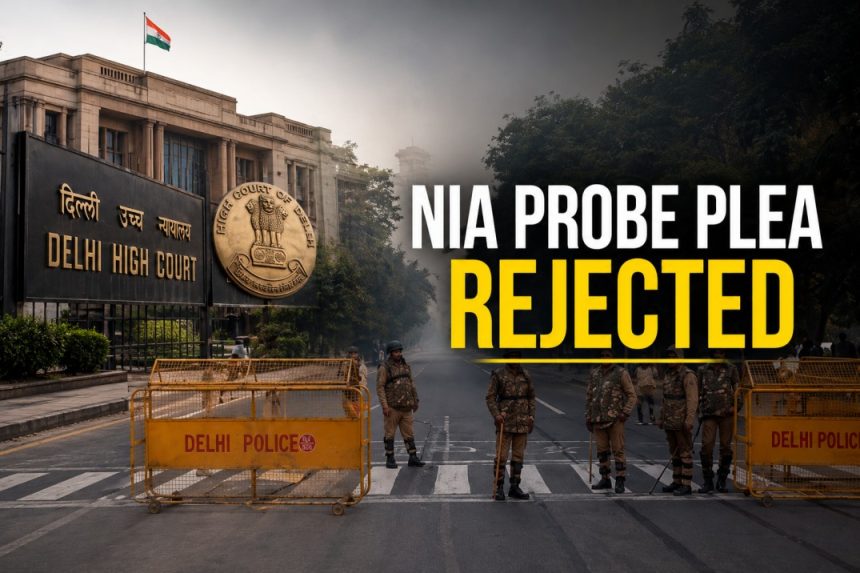
Amid the ongoing student protests at Jantar Mantar, the Delhi High Court has dismissed a Public Interest Litigation (PIL) seeking a probe by the National Investigation Agency (NIA). The court clearly stated that the authority to decide on such investigations lies with the Central Government, and it will not directly intervene in the matter. This ruling marks a significant legal moment in the unfolding protest situation.
🟡 Court’s Observations & Stand
During the hearing, the court observed that the matter is already within the knowledge of the competent authorities. It emphasized that the decision to hand over the case to agencies like the NIA or CBI falls entirely under the executive’s jurisdiction. Showing judicial restraint, the bench refrained from issuing any direct orders regarding the investigation.
🟡 Background of the Protests
The protests were triggered by the nationwide outrage over the NEET paper leak controversy. Thousands of students gathered in Delhi under the “Chalo Sansad” call, demanding accountability and reforms in the examination system. Clashes were reported between protesters and police during the march, with several injuries on both sides.
🟡 Law & Order Situation
Delhi Police have tightened security across protest zones, deploying AI-enabled surveillance systems, facial recognition tools, and drones to monitor activities. CCTV footage is being reviewed to identify individuals involved in violence. As a precautionary step, several metro stations were temporarily shut, and additional forces were deployed across sensitive areas.
🟡 Legal & Policy Perspective
From a legal standpoint, the court’s decision underlines three important principles. First, the doctrine of separation of powers, where courts avoid interfering in executive decisions unless necessary. Second, the jurisdiction over central investigative agencies rests with the Union Government. Third, in sensitive protest-related matters, courts tend to exercise judicial restraint and allow due process to take its course.
🟡 Next phase of the Case
The responsibility now shifts to the Central Government to decide whether a high-level probe by agencies like the NIA is required. Meanwhile, parallel legal challenges related to surveillance and protest management are still under consideration. Protest organizers have indicated that demonstrations at Jantar Mantar are likely to continue and may intensify.
🟡 The Core Issue
The Delhi High Court’s refusal to entertain the PIL has shifted the focus from judicial intervention to executive action. As tensions persist on the ground, the Centre’s next move will be crucial in determining the direction of both the investigation and the ongoing protest movement.