

🔴 By | Arvind Jadhav
🟡 A Fast That Refuses To Fade
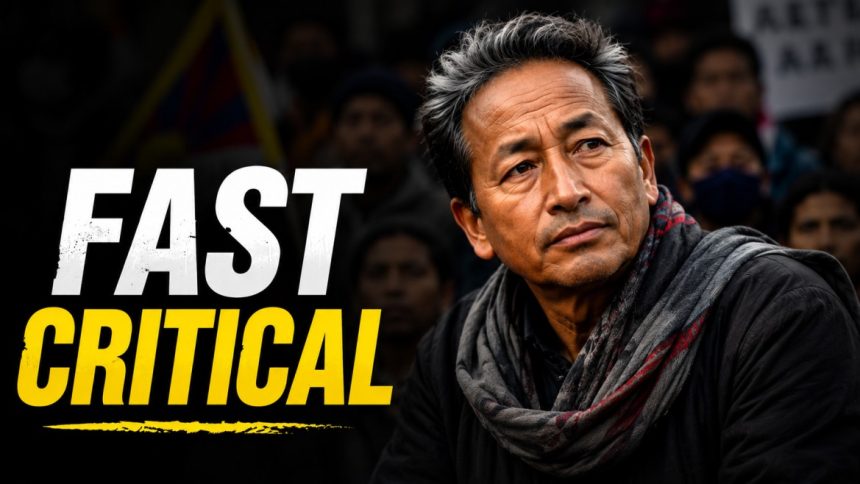
Sonam Wangchuk’s hunger strike is no longer just a protest—it has turned into a powerful symbol of resistance. Sitting in the heart of the national capital, his silent fast is now echoing far beyond Delhi, forcing attention towards Ladakh’s long-pending demands. Even as his body weakens, his message is becoming stronger with each passing day.
🟡 When The Body Slows, The Message Speaks
Visible signs of fatigue and weight loss are raising serious concerns among medical observers. Yet, Wangchuk’s determination remains unchanged. The protest has now reached a stage where the physical toll is undeniable, but the moral pressure it creates is even more significant, pushing the issue into national consciousness.
🟡 From Ladakh To The Nation’s Streets
What began as a regional concern has now crossed geographical boundaries. Students, activists, and concerned citizens are rallying in different parts of the country, amplifying the movement. Online campaigns and ground-level support are turning this into a people-driven narrative rather than an isolated protest.
🟡 Power, Politics And The Pause
The political response so far has been cautious, but the silence is being increasingly questioned. Opposition voices are sharpening their stance, while the absence of a concrete response from authorities is becoming a talking point. The protest is now as much about governance as it is about representation.
🟡 More Than A Protest, A Question Of Identity
At its core, this movement reflects deeper concerns—identity, environment, and constitutional protection. Demands like statehood and Sixth Schedule inclusion are not just policy points; they represent a larger struggle to preserve Ladakh’s cultural and ecological balance.
🟡 The Clock Is Ticking
With every passing day, urgency is building. Wangchuk’s health, public sentiment, and political pressure are all converging into a critical moment. Whether this leads to dialogue or further escalation will define the next chapter of this movement.
This is no longer just about one man on a fast—it is about a region seeking to be heard. Sonam Wangchuk’s protest has transformed into a national flashpoint, where the outcome will carry implications far beyond Ladakh.